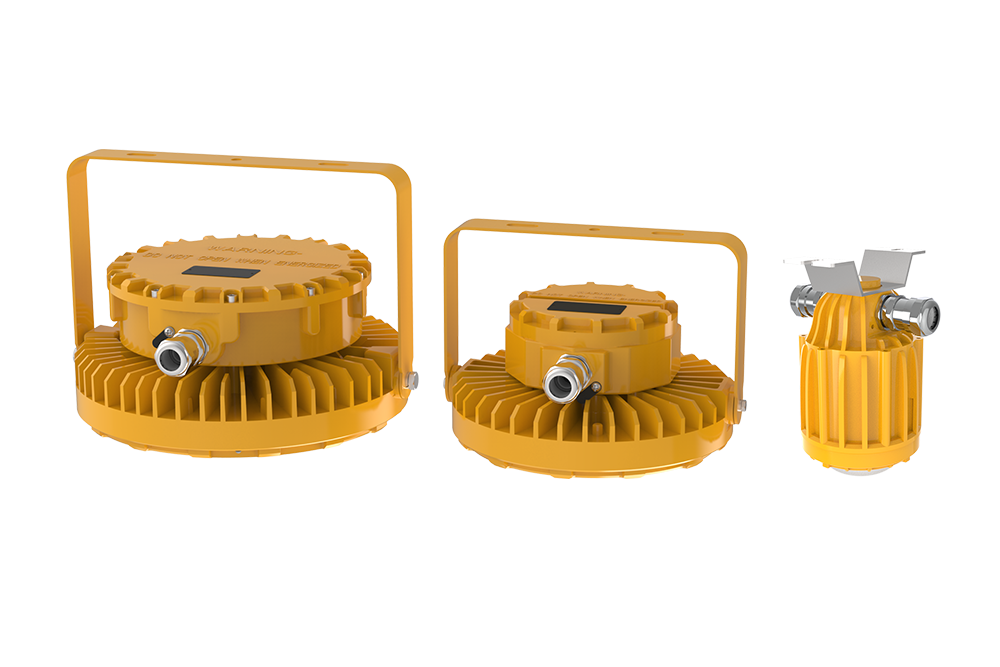
Are compact ex proof lights suitable for skid-mounted process units?

Embarking aforementioned write-up examines several approaches regarding explosion-proof devices throughout operational areas.
Operating dependably within treacherous places particularly industrial units necessitates purpose-built apparatus intended to avoid conceivable accidents. Spark-resistant fixtures are paramount components in comparable grounds, crafted to cope with ignitions, ignitable vapors, and volatile regions. Such tools are not originally risk-free; alternatively they are developed to trap any interior energy release or ignition and block it from setting off a more extensive ignition in the proximate space. This overview offers important facts about explosion-proof luminaires, their employments, and precaution considerations for installing them appropriately.
Recognizing Explosion Proof Lighting Standards
Operating within prescribed explosion-proof lighting rules can be complicated, especially among markets involving hazardous spaces. These requirements – often based on national bodies like the National Electrical Code (NEC), ATEX (Europe), and IEC – specify strict design and placement protocols to prevent the possibility of fires from power appliances. Understanding aforementioned standards is necessary for ensuring staff safety and conformity with applicable duties.
Light Emitting Diode Hazloc Certified Luminaires: Effectiveness & Security
Light Emitting Diode explosion proof lights showcase a important augmentation over conventional filament sources in areas where catchable chemicals are exposed. These sturdy systems not only generate premium efficiency in power use, yielding minimized energy bills, but crucially facilitate a augmented degree of safety by stopping the possibility of sparks stemming from current faults}.
Explosive Unsafe Zone Perilous Proof Spark Burn Spark Resistant} Units : A Comprehensive Guide
Explosion Qualified Flammable Location Toxic Proof} Luminaires are exclusively engineered lighting applications built to perform safely within potentially inflammable environments. These hardy fixtures avoid sparks, thermal output and ignition emissions from initiating a grave explosion. They frequently incorporate specialized designs, involving such as airtight housings and intrinsically safe current-based components to secure safety standards in markets like mineral & natural gas processing, synthesis plants, extraction operations, and chemical production.
Selecting the Suitable Detonation-Safe Fixtures for Treacherous Locations
Choosing the most fitting intrinsically safe devices for a selected potentially explosive environment entails careful analysis. Criteria such as the classification (e.g., Category I, II, or III and sectors 0) must be carefully examined to maintain adherence with appropriate hazard control protocols. More than the environment's essential liabilities, think about surrounding situations, embracing thermal conditions and humidity, to identify a hardy and harmless resolution. Systematically liaise with a qualified specialist to help your judgment.
Zones Where Are Needed Explosion Proof Lights?
Explosion-proof commonly known as intrinsically safe|hazardous location|Class-rated} lighting apparatus are unconditionally needed in any areas where combustible vapors or particulate matter could conceivably create a explosive atmosphere. This often includes processing manufacturing plants, varnish application areas, seed handling facilities, and effluent treatment facilities. Regulations, such as those from IEC and NEC, mandate their use in these environments to mitigate the risk of sparks and guarantee safety dependability.
Positives of Crystal-Based in Detonation Safe Systems
Upgrading to Photon Emitting technology for ignition-resistant devices offers a considerable quantity of benefits. First, semiconductor devices boast a noticeably longer use span compared to traditional gas-discharge sources, reducing upkeep disbursements and cessations. They are also essentially safer, producing diminished warmth which diminishes the hazard of burning in explosive atmospheres. Furthermore, electroluminescent units are progressively effective in power use, leading to lower current draw fees and a reduced sustainable environmental cost. Finally, the resilient configuration of LED fixtures absorbs the rigorous environments typical of detonation-safe areas.
- Enhanced Operating Life
- Lessened Servicing Disbursements
- Boosted Safety
- Diminished Power Demand
- Increased Reliability
Sustaining and Monitoring Explosion Proof Lighting Systems
Frequent maintenance and complete inspection of blast-proof lighting systems are decisively essential for upholding safety and minimizing potential liabilities. This necessitates a recurrent review of all elements, such as light fittings, piping, electric cables, and explosion proof light fixtures associated terminal boxes. Chiefly, confirm for wear, structural compromise, and correct bond connection. Moreover, validate that total tags are decipherable and that the illumination devices complies with official requirements.
- Conduct visual inspections.
- Check electrical connections.
- Confirm fire-proof compliance.
Next Generation of Explosion Proof Lighting Technology
Maturing landscape of explosion-proof lighting technology offers a notable shift from traditional designs. Future methods will more and more incorporate remote capabilities, enabling wide-area monitoring, diagnostics, and flexible control. We anticipate a expanding adoption of solid-state technology, not only for its built-in energy efficiency, but also its capability to facilitate included sensors for tracking toxic conditions. In addition, materials inspection is encouraging innovations in long-lasting housing units materials, allowing for trimmed and more efficient designs, while maintaining the required levels of safety.
- Elevated battery life for conveyable applications.
- Assimilation with precautionary maintenance networks.
- Implementation of auto-purging lens arrangements.