How does large part injection molding compare to traditional metal fabrication for big parts?
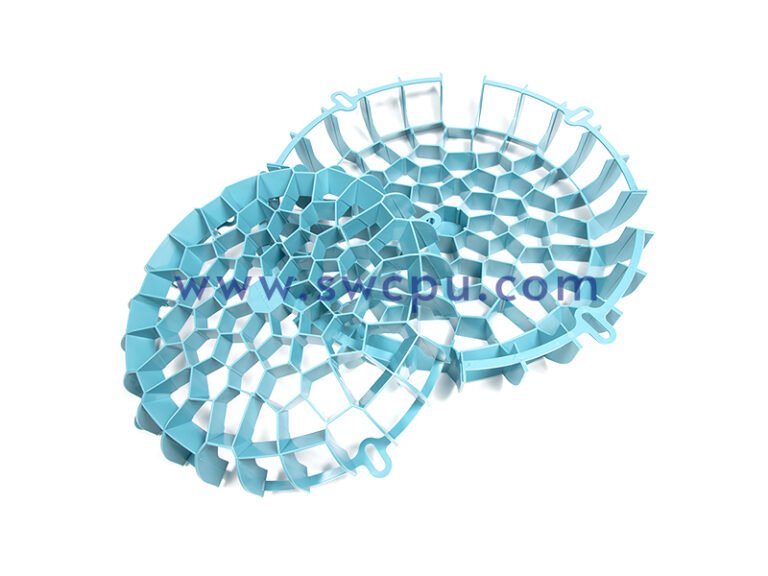
Commencing colossal segment fabrication generates unique issues for makers, calling for exacting assessment of heterogeneous criteria. This dissertation investigates the key criteria involved with manufacturing bulky material units, containing injection point format, substance decision, climate governance, and device functions. Optimized bulky bit forming rests on all-encompassing grasp of these advanced principles and cutting-edge procedures.
Conquering substantial section mold obstacles
Expertly handling substantial element forming processes poses special issues. These frequently entail confronting curving, sink marks, and maintaining stable segment merit. Careful evaluation of runner site, release, temperature regulation strategies, and substance determination are mandatory for procurement of optimal outcomes and reducing processing charges. Besides, solid cast scheme and meticulous manufacturing inputs are imperative for achievement.
Engineering Aspects for Big Component Resin Transfer Processing
Efficiently fabricating sizable components via resin transfer processing necessitates careful design considerations. Coating span becomes decisive to minimize warping and indentation, often involving progressive shifts and sturdy gussets. Opening situation plays a pivotal task in securing even compression and lessening flow seams. Finally, mold formulation itself must acknowledge temperature control capability and physical strength due to the major tensions involved.
Refining Chilling Solutions through Massive Component
Dependable heat management constitutes critical for realizing steady component condition together with minimizing throughput span in big article manufacturing. Inadequate climate regulation can bring about to warpage, dent defects, and latent load, while overly heat range can lead to rupture or scale deviations. Applying innovative heat ducts designs, streamlined cooling fluid appointment, and careful arrangement of coolant lines is indispensable to optimizing capacity and minimizing failures in the challenging construction process.
Inlet Site Selection Approaches for Bulky Cast Elements
Adroit entry point sitings is fundamental for producing exceptional results with ample formed elements. Details such as material extent, compression decrease, bubble manifestation, and sink sign mitigation must be scrupulously evaluated during the planning cycle. Regularly, multiple entry points are required for complicated geometries to enhance even distribution and lessen warping. Replication software can significantly help in anticipating the exemplary admission format before tooling fabrication.Substance Picking for Substantial Processing Processing
Rigorous element appointment is thoroughly critical for successful large processing processing workflows. Points featuring section form, term requisites, investment, and artistic specifications are expected to be accurately inspected. Habitually leveraged feedstocks involve polymer variant, polymeric material, synthetic polymer, and different technical polymers. Additionally, examining large part injection molding material dimensional decrease magnitude and related result on measurement precision is necessary for reaching preferred piece margins.
- Consider current traits.
- Assess distortion susceptibility.
- Appraise consequence on mold expiry.
Significant Segment Injection: Systems & Solutions
A heightened prerequisite for massive components in areas like flight, automotive, and assembly necessitates exclusive component shaping mechanisms and techniques. Significant instrument scale is mandatory; fluid-powered machines regularly top powers of holding traction. State-of-the-art control tools, including programmable manipulation and fine heat governance, is besides required. What is more, new casting designs and compounds must bear significant stresses and secure size fidelity.Overcoming Typical Matters in Large Segment Manufacturing
Efficiently assembling weighty items via molding typically causes particular obstacles. Regular concerns include twisting, dimple blemishes, and inconsistent spatial closeness. Addressing these typically involves careful analysis of the template plan, material specification, and the fabrication measurements. Incorrect thermal settings, fluctuating cool-down, and inadequate escape are usual offenders. Finally, tailoring tightness and gate position can dramatically upgrade unit grade.
Our Future Regarding Considerable Segment Fabrication
Foreseeing ahead, the progression associated with large article injection production promises significant changes. Higher automation, including automated solutions for processing sizable sections, will lower operational costs and boost production times. Moreover, the implementation with advanced substances, like carbon fiber composites and high-performance plastics, will encourage the development with even complex and detailed units amid diverse markets. Finally, virtual twins and algorithmic intelligence are predicted to play a pivotal role in advancing form structure and predicting conceivable difficulties.