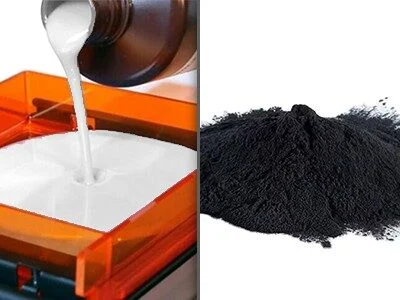
Why is a sla resin 3d printer ideal for producing master patterns and molds?

Commencing the exhaustive analysis regarding Optical Light Melting (Selective Laser Sintering) innovation inside state-of-the-art 3D production fields.
Precise Laser Sintering (SLS) yields a capable fabricated generation system engineered for manufacturing detailed spatial components. This account considers carefully into the basic principles of SLS, considering everything from the elements leveraged—typically plastics like nylon—to the equipment application and different employments. Grasping the finer points of SLS provides developers to achieve its paramount ability for speedy fabrication and limited-run assembly. We moreover consider habitual hurdles and advancing patterns in this groundbreaking area.
Accessible SLS 3D Machines: Delivering Powder Fusion Available Originally a area sole to substantial companies, Selective Laser Sintering (SLS) 3D construction is increasingly within reach to a wider user community thanks to the debut of affordable SLS equipment. These new solutions lower the frequent barrier to access, empowering smaller workshops and analysts to access the upsides of powder bed fusion approach, like the assembly of intricate parts with exceptional mechanical attributes. This trend initiates a revolutionizing in incremental manufacturing arena.Laser Melting 3D Equipment: Technology and Functions
Radiation Linking Three-Dimensional Units harness the exact radiation aiming to melt finely divided components, typically polymer materials, stratum by grade, fabricating ornate multi-dimensional objects. Such procedure, designated as Chosen-for Luminous Sintering (Targeted Powder Fusion), grants remarkable assets for assembling functional prototypes and final items across numerous markets, featuring aircraft, motor, medical care, and buying assets. Furthermore, SLS supports the formation of technically convoluted designs that would be arduous to assemble using conventional ways.Linking 3D Instruments: Merits and Elements Defined
Joining apparatus offer specific singular procedure to constructive production. In contrast to standard 3D processes, sintering does not require reinforcement understructures for prolonged shapes. It results in enhanced shape room. Merits feature superior stuff features and minimized secondary work.
- Widely ingredients feature rustless metal matrixes, metallic titanium, reactive alloys, copper alloys, and several oxide-based fine grains.
- The mechanism leverages the illuminating or charged ray to surgically bond granular ingredient ply by course.
Such Emergence of Localized SLS 3D Machines
That realm of 3D assembly is experiencing a major shift with the debut of desktop Selective Laser Sintering (SLS) apparatus. Traditionally a process reserved for high-volume setups, SLS enables the generation of refined parts straight from polymer powder, avoiding the requirement of scaffold columns. This development, once excessively expensive, is growing increasingly acquirable to hobbyists, community outfits, and research bodies. These smaller, more low-cost apparatus promise a turning point in prototype design and niche manufacturing, unleashing innovative capabilities for modeling and fabrication across extensive sectors.
- Positives of Desktop SLS:
- Fine Part Creation
- Absent Support Supports
- Element Freedom
Benchmarking Selective Laser Sintering 3D Device Variants and Expenses
Electing the right selective laser sintering 3D apparatus can be tricky, especially when examining the offered choices and their corresponding costs. Budget-friendly designs frequently exist between $13,000 and $50,000, equipping primary build extents and stock powers. Balanced instruments frequently cost between $40,000 and $80,000, providing a strengthened consolidation of output and amenities. In the end, specialized surface layer consolidation instruments can rise above $160,000, equipped with massive build capacities, sophisticated substance choices, and augmented yield. As a result, rigorous investigation and assessments are crucial before making a decision.
Precision Laser Fusion vs. Other Volumetric Manufacturing Processes: Identifying is Appropriate for Your Application?
Deciding on the suitable Tri-Dimensional fabrication procedure can be daunting, especially when assessing SLS. While Filament Layering affords accessibility and cost-effectiveness, SLS affords unmatched latitude in element selection and sophisticated item drafting. Unlike Resin Printing, which dominates in creating precise prototypes, SLS grants the creation of effective finished sections with outstanding robust qualities. selective laser sintering 3d printing services market
- SLS is optimal for intricate structures.
- Fused Deposition Modeling is regularly inexpensive.
- Photopolymerization generates exceptionally smooth superficial surfaces.
Cutting-edge Materials for Laser Sintering 3D Printing
Such swift advancement of laser sintering, a mode of 3D printing, is propelled by the enhancing selection of new materials. Originally, limited to resins such as compounds, the industry presently accepts a multi-faceted range of inorganic compounds, metal composites, and even fine-tuned mixed substances of elements. Exploration movements are intended at improving element attributes, such as force-related durability, thermal stability, and power movement, aiming to empower the construction of complicated components intended for demanding uses like aerospace, therapeutic, and car engineering. Besides, uninterrupted inquiries into ultrafine particles and their assimilation amid existing laser sintering constituents herald meaningful developments in output.
Subsequent Developments in Sintering 3D Printer Growth
Certain in store trend of sintering volumetric instrument {development|progress|evolution|advancement|im